
D19 (Hougang · Sengkang · Punggol) · MARKET REPORT + DECISION FRAMEWORKS
The D19 Decision: Resale vs New Launch (Without Paying “Future Prices”)
D19 has matured into a self-sufficient North-East cluster with strong connectivity, amenities, and upcoming growth nodes, such as the Cross Island Line and the Punggol Digital District.
But today’s market requires one shift: stop relying on PSF and surface pricing—and start comparing quantum, runway, and exit audience.

Learn the frameworks buyers use to compare resale vs new launch when price gaps compress.
EXCLUSIVE RELEASE
Don’t Guess Your Entry. Validate It.
Download the report and get the frameworks + district breakdown in one place.
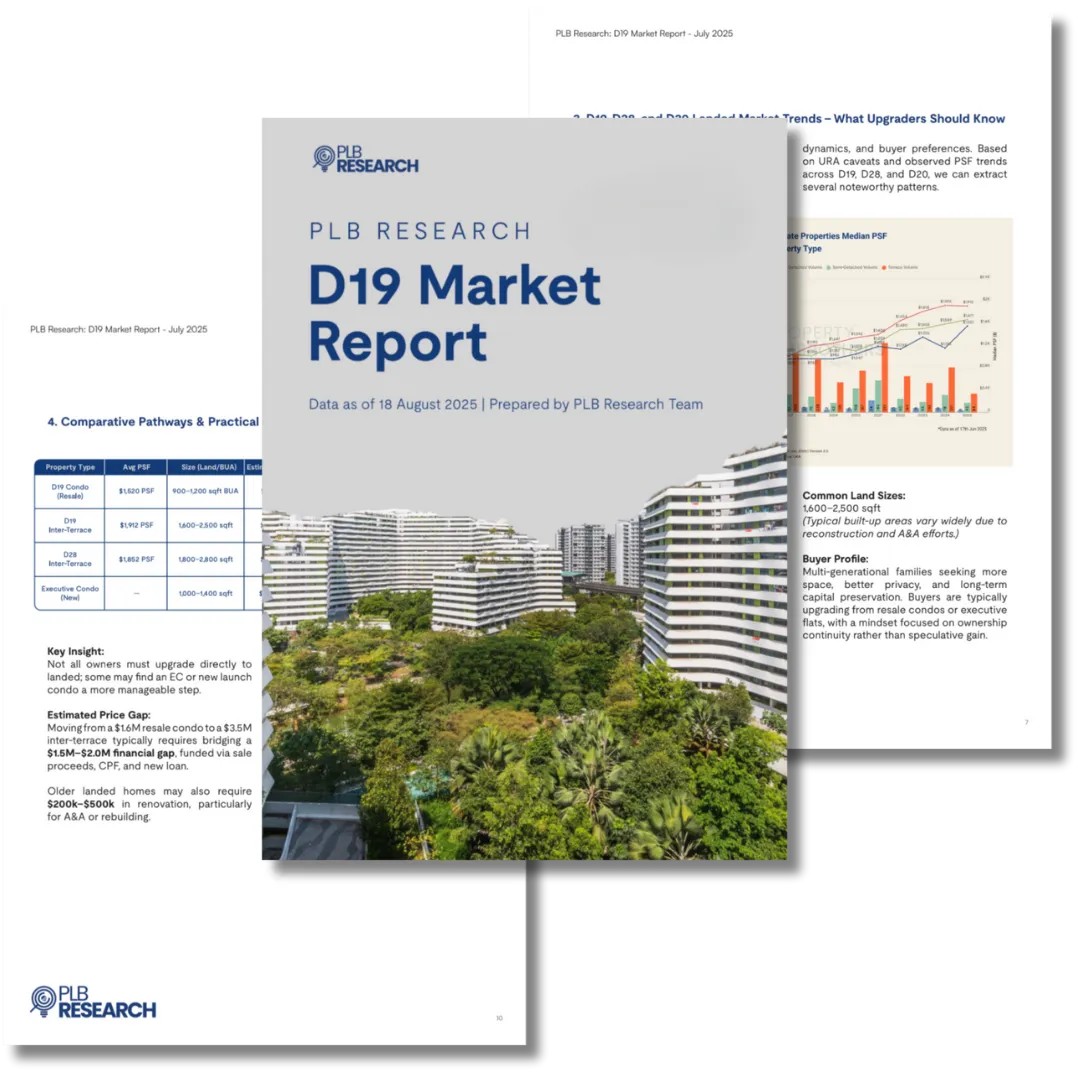
The PRICING TRAP
The Abnormal Inflation Problem
Resale prices are no longer “today’s price.” Many sellers are anchoring to tomorrow’s new-launch price. That’s why a resale can look reasonable on the surface—until you measure the true runway and the exit audience.
Common Buyer Blind Spots:
Using PSF as the main decision tool (harmonisation changed the baseline).
Ignoring “price quantum compression” between resale and upcoming launches.
Buying without an exit audience (5–8 years later, who can take over?).
Overpaying for boutique projects with no volume (liquidity matters).
Quantum > PSF
When the overall quantum is near-identical, a brand-new unit often wins on runway, buyer psychology, and financing comfort—even if the PSF looks higher.
Equity Exit Is The Real Risk
Affordability is tightening. Buyers are combining names again. If you buy high and your exit buyer pool shrinks, the “good deal” becomes a slow exit.
THE D19 CHECKLIST
What Most Buyers Fail To Stress-Test Before Choosing Resale vs New Launch
A property’s value isn’t just the layout. It’s the exit math hidden behind the numbers.
The Quantum Disparity Check
When resale and new launch quantum move too close, you’re no longer buying “cheap resale”—you’re buying compressed upside.
Lease Reset Reality Check
Don’t anchor to TOP date. Use lease start date to reset a resale back to a “full-term” comparison. If the reset price is too close to a new launch, it’s a red flag.
“Secondhand Car” Pricing Test
If the resale is priced like a brand-new unit, ask the real question: Why am I paying brand-new money for secondhand runway?
Volume & Liquidity Filter
Big developments with strong buyer pools tend to hold liquidity better than boutique projects—especially when affordability tightens.
Exit Audience Stress Test (5–8 Years)
If you plan to exit in 5–8 years, you must know who your next buyer is—and whether they can afford the new quantum.
Opportunity Cost Trap
Hesitation isn’t free. If the market reprices in short bursts, waiting can mean entering after the best risk-reward window has passed.
Without these checks, buyers end up paying a “clean” price for a position with unclean exit math.
This Isn’t Guesswork.
It’s a Framework.
The D19 report is built the same way we approach every property decision: define the objective, measure the constraints, and pick the option with the cleanest runway + exit—not the loudest headline.
If you want to understand how we think beyond a single district, these deep dives will show you the broader frameworks we use across Singapore.
The CORE MOVES
Frameworks That Prevent Overpaying in a Compressed Market
A property’s value isn't just determined by the district or house condition; it is dictated by Digital Due Diligence and technical constraints that remain hidden to the untrained eye.
1
Quantum Disparity Framework
When PSF becomes messy, you anchor to what matters: overall quantum for comparable bedroom types.
2
Lease Reset Disparity
Reset resale pricing to a full-term equivalent so you can compare resale vs new launch properly.
3
When New Launch Wins
If a brand-new option is at similar quantum, you’re buying longer runway + cleaner buyer psychology.
4
When Resale Wins
If resale stays meaningfully cheaper after lease reset and still fits your exit horizon, you’re buying disparity upside.
5
Don’t Buy Without Exit Math
Your entry isn’t “cheap” if your exit audience is smaller, slower, or priced out.
Timing & Opportunity Cost
Why Good Windows Close Faster Than Most Buyers Expect
Price gaps don’t close gradually. They compress in uneven bursts—especially when sentiment shifts and supply tightens.
Early Disparity Phase — best upside
Catch-Up Phase — repricing happens fast
Late Phase — risk-reward drops
Missed Window — higher entry + weaker exit
The cost of waiting isn’t always higher prices. It’s entering when the runway is already spent.
Want This Applied To Your Numbers?
The report gives you the logic. The consult helps you apply it to your timeline, budget, and exit horizon—so you don’t commit on a misleading comparison.
A resale vs new launch short list based on quantum + runway
A lease reset check (where relevant)
Exit audience assumptions stress-tested
Clear “buy / wait / switch strategy” recommendation
This Strategy Review gives you direct access to that level of precision.

Adrian Lim
Co-founder & Sales Advisory Partner, PropertyLimBrothers
Adrian Lim, co-founder of PropertyLimBrothers, brings 18 years of real estate experience and over 1,800 homes sold. He guides and mentors our sales team through every stage of a transaction, sharing strategic insights and proven, hands-on expertise. His passion for serving clients is matched by his love for long-distance running — a discipline that mirrors his forward drive. Adrian bridges the gap between realtors and consumers with clarity, purpose, and a commitment to helping others succeed.
testimonials
What Clients Say

© 2026 PropertyLimBrothers | All Rights Reserved.
CEA License Number: L3010958I